
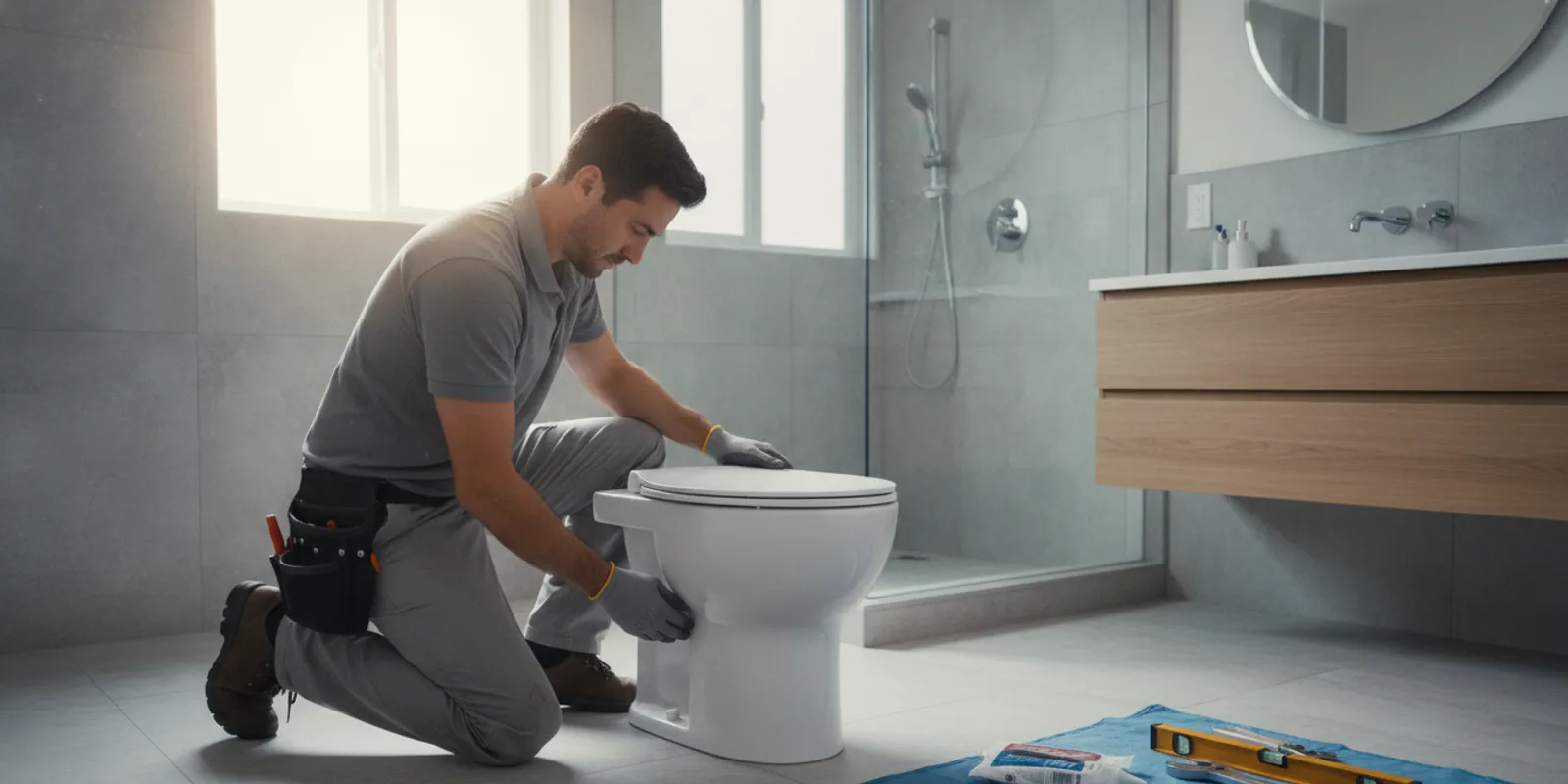
A toilet can look like a simple fixture, but a proper installation involves more than tightening a few bolts. A damaged flange, an incompatible rough-in, a worn shutoff valve, or a small leak under the bowl can create larger problems over time. If you need a toilet installation service in the Inland Empire, a professional plumber can evaluate the existing connection, help confirm the right fixture, and test the finished installation before leaving.
Schedule a toilet installation consultation
When Should You Call for a Toilet Installation Service?
Some toilet replacements are planned. Others follow a leak, crack, clog, or bathroom renovation. Calling a plumber is especially useful when the toilet is connected to older plumbing or when you are not sure whether the problem is limited to the fixture.
Common reasons to replace a toilet
- Cracked porcelain: A crack in the tank or bowl can allow water to escape and may worsen with use.
- Recurring leaks: Water around the base, tank, or supply connection may indicate a failed seal or a plumbing connection that needs attention.
- Frequent repairs: Replacing several internal parts over time may make a new, compatible fixture a more practical option.
- Bathroom remodeling: A remodel may call for a different bowl shape, seat height, flush design, or appearance.
- Changing household needs: A homeowner may want a more accessible height or a configuration that better fits the room.
- Floor or subfloor concerns: Movement, staining, soft flooring, or a toilet that rocks can point to an issue below the fixture.
A new toilet does not automatically solve a problem with the drain, flange, floor, or supply line. A professional installation starts by checking the conditions that affect the fixture, rather than treating the toilet as an isolated component. For broader residential plumbing concerns, you can also review residential plumbing services.
When repair may be different from replacement
A toilet that runs continuously, has a loose handle, or fills slowly may have a replaceable internal component rather than a failed bowl or tank. Replacement becomes a broader decision when the porcelain is damaged, the fixture does not fit the room, the base connection repeatedly leaks, or repair history suggests that the existing toilet is no longer serving the property well.
Start by describing the symptom instead of assuming the solution. Tell the plumber whether water appears only after a flush, whether the fixture rocks, whether the bowl drains slowly, and whether the shutoff valve works. Those details help separate a fixture problem from a supply, drain, flange, or floor problem and make the installation discussion more precise.
What Should a Plumber Check Before Installation?
Before selecting or setting a toilet, the installer should inspect the existing setup. This helps prevent an avoidable mismatch and gives the property owner a clearer understanding of the work.
The rough-in measurement
The rough-in is the distance from the finished wall behind the toilet to the center of the floor drain or mounting bolts. Baseboards, trim, and wall coverings can affect the measurement. A fixture designed for a different rough-in may not sit correctly, may leave an unwanted gap, or may interfere with the wall.
Measuring before purchase is important. The plumber may also check the available width and depth, the location of the supply line, and the swing of the bathroom door. These details matter when replacing a standard toilet with an elongated bowl, a taller model, or a different configuration.
The shutoff valve and supply line
The shutoff valve should close fully and operate without leaking. If it is corroded, difficult to turn, or unable to stop the water, it may need attention before the new fixture is installed. The supply line also needs to reach the connection without bending sharply or pulling on the valve.
It is better to identify a weak shutoff valve before installation than after the water has been turned off and the old toilet has been removed. A plumber can explain whether the existing valve and supply connection are suitable for reuse.
The flange, drain opening, and floor
The toilet flange connects the bowl to the drain and provides the mounting points for the fixture. It should be stable, properly positioned, and in suitable condition for a new seal. The surrounding floor should also be examined for movement, moisture damage, or unevenness.
If the flange or floor needs repair, the installation scope may change. Covering the symptoms with a new toilet can leave the underlying issue unresolved. This is one reason a professional evaluation is valuable when the old toilet rocked, leaked at the base, or had been repaired repeatedly.
The drain path and surrounding fixtures
The installer should also ask whether nearby drains have been slow, whether more than one fixture backs up, or whether the property has experienced sewer odors. A toilet can flush normally during a brief test while a developing drainage restriction remains elsewhere in the system. When several fixtures show related symptoms, the correct next step may involve the drain or sewer line rather than only the replacement toilet.
How Do You Choose the Right Replacement Toilet?
Fixture selection should balance fit, function, room dimensions, and household preferences. A plumber can help confirm compatibility, but the property owner should also consider how the bathroom is used.
| Decision | What to compare | Why it matters during installation |
|---|---|---|
| Rough-in size | Existing wall-to-drain measurement and fixture specifications | Determines whether the bowl and tank will fit the connection and available space |
| Bowl shape | Round-front or elongated design | Affects room clearance, comfort, and door or cabinet interference |
| Seat height | Standard or taller configuration | Changes comfort and accessibility for the people using the bathroom |
| Flush design | Fixture performance, controls, and parts availability | Influences operation, maintenance, and future service needs |
| Water connection | Supply-line position and valve condition | Helps avoid strain, seepage, or a connection that cannot be shut off |
| Room layout | Clearance from walls, vanity, tub, and door | Ensures the installed toilet can be used and serviced comfortably |
Keep the product documentation and model information after the installation. If a part later needs replacement, those details can make service easier. A toilet should be selected for the actual room and plumbing connection, not only for its appearance in a showroom.
One-piece, two-piece, and specialty considerations
One-piece and two-piece toilets can differ in weight, access, cleaning considerations, and installation handling. A two-piece model has a separate tank that must be attached and sealed to the bowl. A one-piece model may require more care while it is positioned because the fixture is a single unit. The important question is not which style is universally best; it is which model fits the measured space, the connection, and the people who will use it.
For a small bathroom, check the distance from the front of the bowl to the door or other fixture. For a household focused on comfort, compare seat height and bowl shape. For a commercial property or rental, consider how easily the model can be serviced and whether replacement parts can be identified later. These decisions are easier before the old toilet is removed.
What Happens During a Professional Toilet Installation Service?
The exact sequence varies with the property and the condition of the existing plumbing, but a typical installation follows a deliberate process.
- Confirm the scope: The plumber reviews the replacement fixture, access, rough-in, supply connection, and any visible concerns.
- Shut off and drain the water: The water supply is closed, the tank and bowl are emptied, and the remaining water is removed as needed.
- Remove the existing toilet: The old fixture is disconnected and taken out carefully so the flange and floor can be inspected.
- Inspect the connection: The installer checks the flange, drain opening, mounting points, floor condition, shutoff valve, and supply line.
- Prepare the mounting area: The connection is cleaned and any needed preparation is completed before the new seal and fixture are set.
- Set and secure the bowl: The bowl is positioned over the drain, aligned, and secured without applying force that could damage the porcelain.
- Install the tank and supply connection: For a two-piece model, the tank is attached according to the fixture instructions, and the water supply is connected.
- Install the seat and operating parts: The seat, handle, button, or other supplied components are fitted and adjusted.
- Fill and test: The valve is opened gradually, the tank fills, and the fixture is flushed multiple times while the connections are checked.
Public installation specifications commonly identify removal of the existing toilet, installation of a new wax ring, and setup of the replacement fixture as separate parts of the work. For example, a City of Ventura residential toilet installation request describes those installation elements in its project scope: review the City of Ventura toilet installation specification.
What can change the installation scope?
A straightforward replacement is not the same as an installation that uncovers a damaged flange or wet flooring. The scope can also change when the selected toilet has a different rough-in, when the supply valve cannot be closed, or when the drain connection does not match the fixture. Ask the plumber to explain each proposed correction in terms of safety, sealing, fit, and future operation.
Before work begins, confirm which fixture is being installed, what parts are included, whether the existing toilet will be removed, and how any unexpected condition will be handled. Clear communication is especially helpful in a rental, office, or other property where the bathroom must be returned to service in an organized way.
How Can You Check for Leaks After Installation?
Leak checking should happen before the installation is considered complete. A small amount of water around the base or supply connection should not be dismissed as normal.
- Open the shutoff valve slowly and watch the supply connection as the tank fills.
- Check around the tank bolts, tank-to-bowl connection, and supply-line connection.
- Flush the toilet several times and inspect the base while water moves through the drain.
- Look and feel carefully for moisture around the floor connection, without disturbing the fixture.
- Confirm that the toilet does not rock when used or lightly tested.
- Make sure the shutoff valve can close if a problem appears.
Water at the base after a flush can indicate a seal, flange, drain, or fixture-positioning issue. Water at the supply connection can point to a valve, line, or threaded connection problem. If you see a leak, close the shutoff valve and contact a plumber rather than continuing to flush the fixture.
What to monitor during the first few uses
Continue to notice whether the fixture stays dry, remains stable, refills normally, and clears the bowl without unusual delay. A problem that appears only after several flushes is still worth reporting. Pay attention to the base, the wall-side supply connection, and the point where the tank joins the bowl. Do not tighten porcelain hardware aggressively if you notice movement or seepage; additional force can damage the fixture.
What Should Be Tested Before the Plumber Leaves?
A complete handoff should cover more than whether the toilet flushes once. The installer should verify the basic operation and explain anything that needs monitoring.
- The toilet fills and shuts off without continuous running.
- The flush handle, button, or other control works as intended.
- The bowl clears without unusual backup or slow drainage.
- The fixture remains stable and properly aligned.
- The supply connection and base remain dry during repeated testing.
- The seat and tank components are secure.
- The owner knows where the shutoff valve is and how to close it.
Ask for a short explanation of the fixture’s operating parts and keep any care or warranty documents with the model information. If more than one person uses the property, make sure household members or staff know which valve controls the toilet and whom to contact if water appears.
If the property has a history of backups, slow drains, or sewer concerns, a new toilet may not be the complete answer. In that situation, related services such as drain cleaning and sewer line service or a sewer camera inspection may help identify a separate drainage problem.
Can a Toilet Installation Reveal Other Plumbing Problems?
Yes. Removing an older fixture can expose conditions that were hidden during normal use. Examples include a deteriorated flange, a damaged floor, a corroded shutoff valve, an incorrect previous repair, or a drain connection that is not positioned as expected.
That does not mean every replacement requires extra work. It means the installer should explain what was found and separate necessary corrections from optional improvements. Ask what caused the condition, what could happen if it is left unresolved, and how the recommended work changes the installation.
For older homes in Riverside, San Bernardino, and surrounding Inland Empire communities, the condition of the surrounding plumbing can be as important as the new fixture. A professional who handles both fixture work and broader plumbing services can assess the connection in context.
Questions to ask when additional work is recommended
- What part is damaged or incompatible?
- Is the condition affecting the seal, the fixture’s stability, the water supply, or drainage?
- Can the new toilet be installed safely without correcting it?
- Will the proposed work change the fixture location or room clearance?
- What testing will be completed after the correction?
These questions help you understand the relationship between the toilet and the rest of the plumbing. They also reduce the chance of treating a visible symptom while leaving the cause in place.
How Can You Prepare for the Appointment?
A few details can make the visit more efficient:
- Choose the replacement fixture before the appointment, or ask whether selection help is available.
- Record the rough-in measurement if you are comparing toilets.
- Clear the area around the toilet so the installer can work safely.
- Tell the plumber about rocking, leaks, stains, slow flushing, backups, or past repairs.
- Keep pets and household items away from the work area.
- Ask how the old fixture will be handled and whether additional repairs require approval.
If you are replacing a toilet because of an active leak, close the shutoff valve if it works and limit use until the issue can be evaluated. For a planned replacement or a more complicated connection, provide the fixture model and any relevant history when you contact Diamond House Plumbing.
Frequently Asked Questions
How long does toilet installation take?
The time depends on access, the fixture type, and the condition of the flange, floor, shutoff valve, and supply line. A straightforward replacement is different from an installation that requires correcting a leak or damaged connection.
Can a new toilet be installed on an old flange?
It may be possible when the flange is stable, correctly positioned, and in suitable condition. The installer should inspect it after the old toilet is removed rather than assuming it can be reused.
Why does a toilet rock after installation?
Rocking can result from an uneven floor, an unstable flange, or an installation that needs adjustment. It should be addressed because movement can affect the seal and the surrounding floor.
What if the shutoff valve will not close?
Do not force a stuck valve. Tell the plumber before the old toilet is removed so the water-supply plan can be addressed safely.
Should I replace the supply line with the toilet?
Not always. The existing line may be suitable if it is in good condition and fits correctly, but a plumber should inspect it and the shutoff valve before reuse.
Request professional toilet installation help
Plan Your Toilet Replacement With Confidence
A successful toilet replacement depends on fit, a sound connection, careful sealing, and thorough testing. Diamond House Plumbing serves residential and commercial property owners across the Inland Empire and can help evaluate the installation details before work begins.
When you are ready to replace a toilet or address the plumbing conditions around it, schedule an evaluation so the next step is based on the actual fixture and connection.

Leave a Reply