
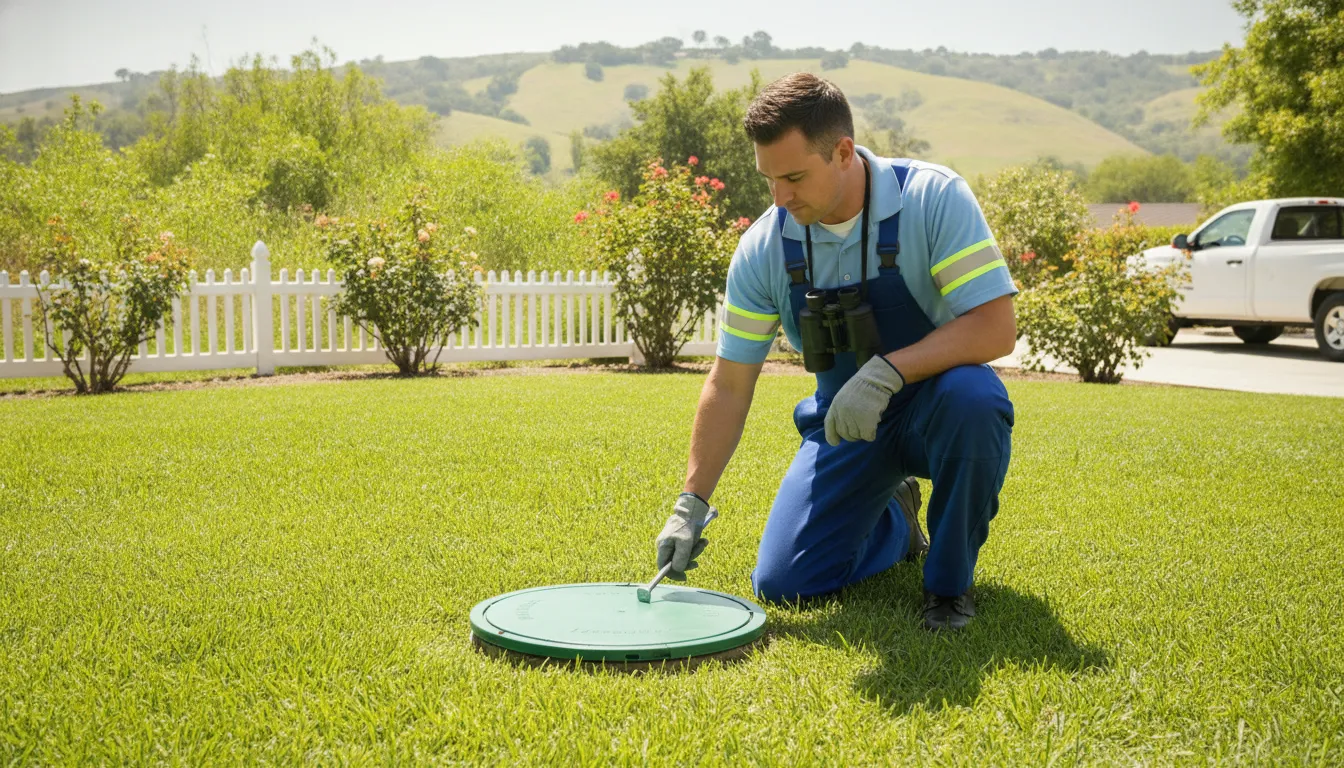
Choosing a septic repair provider is not simply a matter of picking the first name in a search result. The right fit should understand the type of system on your property, investigate the cause of the problem, and explain the proposed work clearly before repairs begin.
Contact Diamond House Plumbing about septic repair
The best septic system repair companies combine relevant septic experience with careful diagnosis, a clear written scope, practical communication, and a service area that includes your property. For owners in Riverside and San Bernardino Counties, local knowledge can also help clarify access, coordination, restoration, and follow-up needs.
That standard is more useful than an unsupported ranking because septic problems can involve tanks, distribution components, drain fields, or connected sewer lines. The following criteria can help residential and commercial property owners compare providers and ask better questions before approving work.
What Are the Best Septic System Repair Companies?
The best septic system repair companies are not defined by a universal ranking. They are providers whose experience, diagnostic approach, communication, and service area fit the property and the problem. For an owner in Riverside or San Bernardino County, that means finding a company that can investigate the full septic system, explain the findings, and provide a clear scope of work before repair decisions are made.
Start by asking whether the provider regularly handles the type of system and property involved. A residential septic issue may require a different approach from a high-use commercial property. Relevant experience can also include tank components, distribution boxes, drain lines, pumps, and sewer connections. Diamond House Plumbing serves residential and commercial customers throughout the Inland Empire, with septic system and sewer lateral work among its service specialties. Review the company’s Diamond House septic services to see whether its listed capabilities align with your situation.
Diagnosis should come before a recommendation. A useful evaluation may examine the tank, pump components, distribution box, and drain lines rather than treating every backup or slow drain as the same problem. One important check is whether the distribution box is structurally sound and whether drain lines are receiving equal flow. That detail can help distinguish a localized component issue from a broader system concern.
Ask what records will help guide the evaluation. The U.S. Environmental Protection Agency notes that property owners can request septic record drawings, often called as-built designs, and permits from the local permitting authority. Having those documents available can give the provider helpful context about the system’s layout and approved design. The strongest fit is the company that combines relevant local service knowledge with careful diagnosis, clear explanations, and a scope that matches the evidence found on the property.
7 Signs a Septic Repair Company Is Worth Calling
Some septic warning signs deserve more than a quick adjustment or a wait-and-see approach. They do not identify the cause by themselves, but they can show that an inspection is appropriate. A responsible provider should investigate the property, ask about the system’s history, and explain what the evidence supports before recommending a repair.
- Backups or sewage returning indoors. Wastewater backing up through a drain is a serious service concern. The provider should assess where the restriction or failure may be occurring and address sanitation needs appropriately.
- Slow drains in more than one fixture. A single slow fixture may involve a localized plumbing issue. Several slow fixtures can justify checking the building drain, sewer lateral, tank, or other shared components. Diamond House’s drain and sewer services are a relevant starting point when the symptoms may extend beyond one fixture.
- Persistent sewage odors. Odors near the tank, cleanout, drain field, or inside the property should be described to the provider. An evaluation can help distinguish a plumbing ventilation concern from a septic-system problem.
- Wastewater surfacing outdoors. Standing wastewater or soggy ground near system components needs prompt professional attention. Keep people and pets away from affected areas until the condition is assessed.
- An unusually wet or lush drain-field area. A patch that stays saturated or grows noticeably differently from surrounding areas may warrant inspection. It is a clue to document, not proof of a particular failure.
- The same problem keeps returning. Repeated backups, odors, or slow drainage suggest that the underlying cause may not have been fully identified. Ask the provider to review prior work and explain what additional inspection is needed.
- An unexplained change in system performance. A sudden change after heavy use, construction, landscaping, utility work, or other property activity should be included in the service history. Context can help guide a more focused evaluation.
Look for a company that connects its findings to a clear scope of work. Its recommendations may include inspection, pumping, repairs to components such as lids or baffles, line work, or another option, depending on the evidence. Review the verified septic system services available for the property, and ask what the visit will investigate before work begins.
How to Compare Septic Repair Companies Before Hiring
The strongest comparison is based on how thoroughly a provider evaluates the system and explains the work, not on a bold promise or a polished advertisement. Before scheduling, ask each company to address the same practical points. The U.S. Environmental Protection Agency notes that property owners can request septic record drawings and permits from the local permitting authority. Those records can help a provider understand the system’s original design and history.
| What to compare | What to look for |
|---|---|
| Relevant experience | Experience with septic tanks, distribution boxes, pumps, drain fields, sewer laterals, and the type of property involved. |
| Diagnosis | A clear explanation of what will be inspected, what evidence supports the finding, and whether additional testing or camera work is appropriate. |
| Scope of work | A distinction between the confirmed problem, recommended repair, and possible alternatives. The provider should explain when repair and replacement need to be considered. |
| Written proposal | Specific work items, materials, site preparation, exclusions, restoration, and terms presented in writing so the proposals can be compared fairly. |
| Licensing and insurance | Current license information and proof of applicable insurance, verified through the relevant state or local resources when needed. |
| Local coordination | A plan for permits, inspections, utility locating, access requirements, and coordination with local authorities where applicable. |
| Communication | A named contact, clear updates, realistic scheduling information, and a process for raising questions before work begins. |
| Restoration | An explanation of how disturbed soil, landscaping, driveways, or other affected areas will be handled after the repair. |
| Follow-up | Written service records, maintenance guidance, and clear terms for addressing concerns after the work is complete. |
Use the same questions for every provider serving your Riverside or San Bernardino County property. A careful comparison makes it easier to identify a complete plan and avoid choosing based on an incomplete scope alone.
What Should a Septic Repair Visit Include?
A first visit should do more than identify an obvious symptom. It should give the property owner a clear explanation of what was observed, what those observations may indicate, and why a particular repair is being recommended. A thorough process can help you compare the best septic system repair companies without assuming that every backup, odor, or slow drain requires the same remedy.
- Intake and history. The provider should ask about the current problem, when it began, affected fixtures, prior pumping or repairs, and any recurring symptoms. Have available maintenance records, system details, and property access information ready.
- System inspection. The visit should examine accessible parts of the system, which may include the tank, pump tank, distribution box, inlet and outlet components, filters, controls, and visible drain-field conditions. The exact inspection depends on the system design and the reported issue.
- Diagnosis. Observations should be connected to a likely source rather than treated as proof by themselves. Depending on the situation, evaluation may include checking sludge and scum levels, looking for leaks or backup staining, assessing drainage, or using camera inspection for suspected pipe problems.
- Options. The provider should explain whether the findings point toward a focused repair, cleaning or pumping, component replacement, line work, or a broader system concern. If more than one reasonable path exists, ask how the options differ and what each is intended to address.
- Written scope. Request a written description of the recommended work, affected components, exclusions, materials, restoration responsibilities, and any conditions that could change the scope. A written record makes the recommendation easier to review.
- Coordination. Ask who will handle applicable permitting, utility coordination, property access, and required communication with local authorities. Septic systems are subject to local requirements, so responsibilities should be clear before work begins.
- Repair. Work should follow the agreed scope, with changes explained before additional work is performed. The provider should protect the property and communicate any finding that materially changes the recommended approach.
- Restoration. Confirm how excavated areas, disturbed landscaping, access routes, or other affected surfaces will be addressed. Restoration may depend on the work and site conditions, so it belongs in the conversation rather than being assumed.
- Follow-up and records. Before closing the visit, ask for a service report describing completed repairs and the observed system condition. The US EPA SepticSmart education materials offer additional homeowner guidance for understanding system care and documentation.
How Local Conditions Affect Septic Repair in Riverside County
Septic repair is shaped by more than the tank itself. In Riverside and San Bernardino County, a provider should understand how property access, drain-field layout, local records, and nearby utilities can affect the work that is being considered. That local context helps turn a general recommendation into a scope that fits the property.
Start by asking how the contractor will evaluate access to the tank, distribution box, and drain field. Gates, landscaping, slopes, hardscape, and the location of other buried utilities can affect how an inspection or repair is approached. Drain-field conditions also deserve careful attention. Unequal drainage, surfacing water, or groundwater affecting the field can point to a broader issue than a single damaged component. A thoughtful provider should explain what was observed and which additional evaluation, if any, supports the recommendation.
Records and coordination are another part of local planning. Ask who will review available as-built drawings, permits, or prior inspection information, and who will communicate with the applicable county or utility authority when coordination is needed. Property owners can also request septic design drawings and permits from the local permitting authority, giving the contractor useful background before work is scoped.
Residential and commercial properties have different constraints
For a home, the discussion may center on protecting access, landscaping, household plumbing, and the areas surrounding the drain field. Owners comparing residential plumbing services should ask how restoration will be handled after the repair and what the property needs to be ready for an inspection.
Commercial properties may have higher occupancy, customer traffic, or operational requirements. Diamond House Plumbing’s service guidance recognizes commercial work, including work for high-traffic properties and dealerships, as requiring attention to limiting disruption. That does not promise a particular schedule or outcome. Ask how the provider will communicate site access, work areas, coordination, and restoration so the owner can plan responsibly.
Questions to Ask Before Choosing a Septic Repair Company
A few focused questions can reveal whether a provider is prepared to investigate the problem or is simply offering a quick recommendation. Ask how they diagnose the issue, what areas they will inspect, and whether they can explain the findings in plain language. Symptoms such as backups, odors, slow drains, or wet ground can have more than one possible cause, so the proposed work should follow an evaluation.
Questions about diagnosis and scope
- What will you inspect before recommending a repair?
- Could the problem involve the tank, distribution box, baffles, inlet or outlet, or drain field?
- What evidence supports the proposed scope of work?
- Will you explain whether repair, replacement, or another option is appropriate?
A clear answer does not require a property owner to understand every septic component. It should explain the observed condition, the work being considered, and any limitations that could affect the evaluation. You can review the types of inspections, repairs, and installations described on the septic system services page when preparing your questions.
Questions about documentation and coordination
- Will I receive a written description of the recommended work?
- What preparation or property access will be needed?
- Who will coordinate permits or utility requirements when applicable?
- How will the work area be restored after the repair?
- What follow-up or warranty terms should I understand in writing?
For a commercial property, also ask how the work may affect operations and what planning is needed to limit disruption. For a home, clarify access, affected areas, and what the property owner should do if symptoms return. Comparing answers from providers serving Riverside and San Bernardino County can help you choose based on documentation, communication, and diagnostic care rather than broad claims.
Contact Diamond House Plumbing about your septic repair questions
How Maintenance Can Reduce Repeat Septic Problems
A repair addresses the problem identified during a service visit, but the follow-up conversation matters too. Ask what was found, what was repaired, and what conditions could affect the tank, pipes, pump, or drain field later. A clear service report should record completed repairs and the tank condition. Keep that report with your septic records so the next inspection starts with useful history instead of guesswork.
The U.S. Environmental Protection Agency recommends regular inspection and pumping schedules that depend on the system and household, rather than one universal timetable. Its SepticSmart education materials can help property owners understand care responsibilities and prepare practical questions for a service provider. Ask whether your system has electrical or mechanical components, whether its inspection interval differs, and which local records or permits should be retained.
Protect the drain field after repairs
Drain-field conditions deserve specific attention during follow-up. The provider should explain whether the repair involved distribution components, inlet or outlet piping, baffles, risers, or leach lines, and whether any area needs to remain accessible. Avoid making changes to the property that could compact the soil or redirect water toward the drain field unless a qualified professional has reviewed the plan. Maintenance does not guarantee that another failure will not occur, but it can help identify developing concerns before they become larger repairs.
Diamond House Plumbing’s septic system services page states that preventative maintenance can help catch small issues, protect the drain field, and reduce emergency repairs. Treat that as a reason to discuss an appropriate maintenance plan, not a promise of a particular result. For recurring backups, odors, wet areas, or slow drainage, ask for a documented evaluation and a clear explanation of the recommended next step.
Frequently Asked Questions
How should I compare septic system repair companies?
Compare providers by relevant septic experience, inspection quality, and how clearly they explain repair options. Confirm that the written scope identifies the work, coordination needs, restoration, and follow-up terms. Choose the company that gives you enough information to make a sound property-specific decision rather than relying only on a ranking or review count.
What should happen during a first septic repair visit?
A first visit should begin with questions about symptoms, recent history, and property use. The provider should then inspect the accessible components, investigate the likely source, explain what the findings mean, and outline practical repair options. Ask for a written scope before approving work, especially when excavation, drain-field work, utility coordination, or restoration may be involved.
Does local experience matter when choosing a septic repair company?
Local experience can help a provider plan for property access, site conditions, county or utility coordination, and the difference between residential and commercial needs. For properties in Riverside or San Bernardino County, ask how the company handles those local planning details and what information you should prepare before the visit.
What should I do if septic problems keep coming back?
Recurring backups, slow drains, odors, wet areas, or sewage surfacing deserve a fresh evaluation instead of repeated short-term fixes. Provide the contractor with records of prior work and ask whether the underlying cause has been identified. What evidence supports the proposed scope, and whether maintenance, repair, or replacement should be considered.
Ready to Discuss Your Septic Repair Needs?
Clear answers can help you understand the next step for your property and prepare for a more focused conversation about the work involved. Contact Diamond House Plumbing to discuss your septic repair needs and next steps.

Leave a Reply