
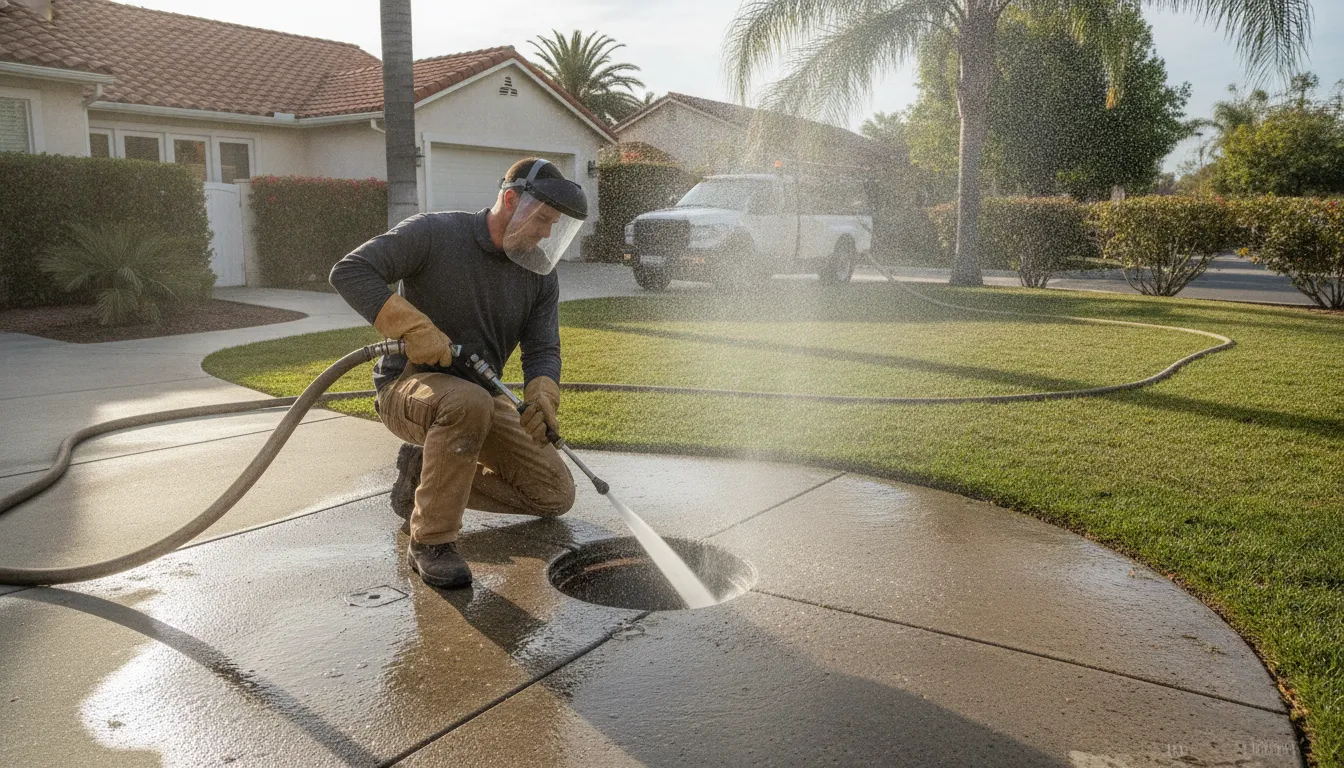
Sewer cleaning removes blockages, roots, grease, and settled debris from a sewer line so wastewater can move through the pipe more normally. It may involve mechanical equipment, water jetting, or both, depending on the obstruction and the pipe’s condition. For property owners in Riverside and San Bernardino County, recognizing the warning signs early can help separate a routine cleaning need from a damaged lateral or a larger sewer problem.
Contact Diamond House Plumbing to discuss sewer cleaning for your Inland Empire property.
A slow drain does not always mean a main sewer blockage. One fixture may have a localized clog, while several fixtures that slow together can point to a restriction farther down the system. Recurring problems can indicate roots, a cracked pipe, a shifted joint, or a low section that holds solids. The goal is to identify the cause and choose a fitting method.
What is sewer cleaning?
Sewer cleaning is the professional removal of obstructions and buildup from a building sewer or sewer lateral. A technician accesses the line through a cleanout or another suitable entry point, uses equipment matched to the pipe and blockage, and checks whether flow has been restored. Cleaning can improve a restricted line, but it does not automatically repair a cracked, collapsed, or badly shifted pipe.
The term can cover several related services:
- Mechanical clearing: A cable and cutting head can break through or pull back certain obstructions.
- Hydro jetting: High-pressure water can scour grease, sludge, and debris from appropriate sewer piping.
- Root removal: Specialized equipment may cut or clear roots that have entered through a joint or damaged section.
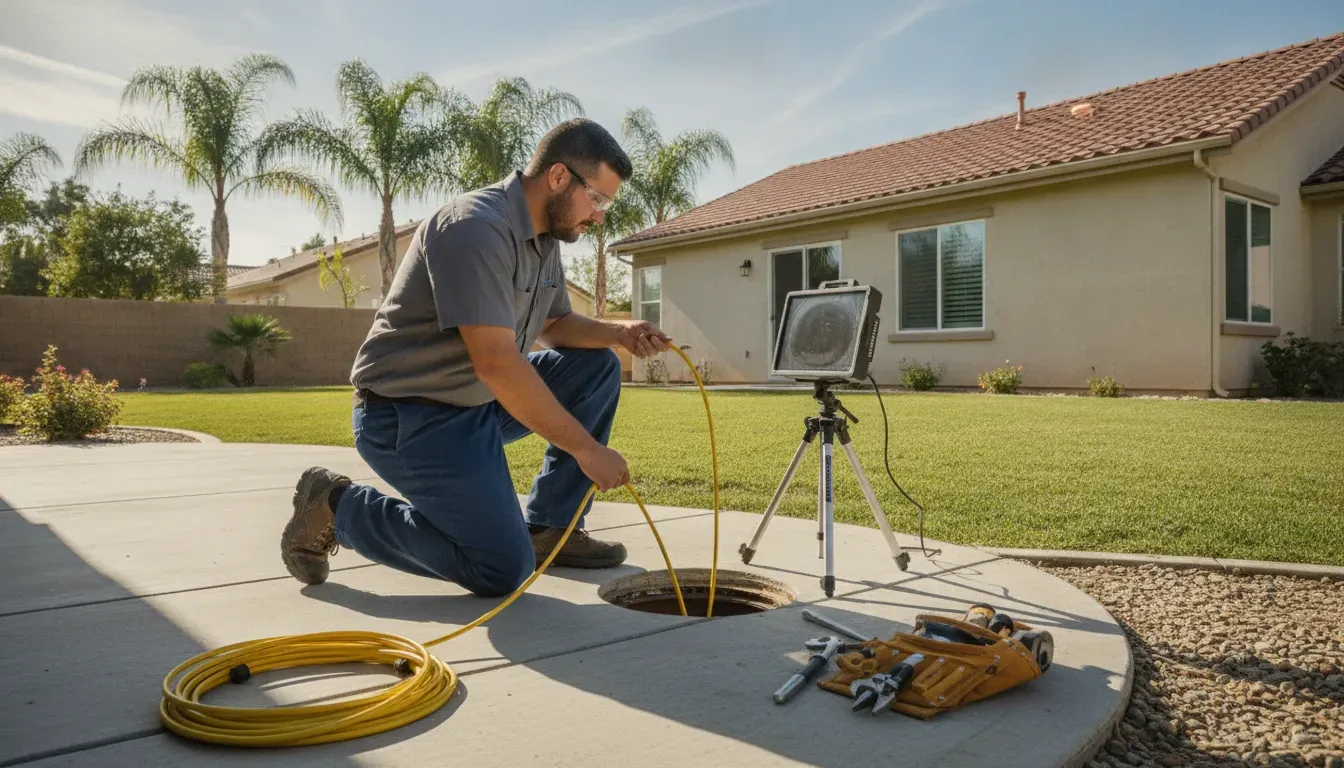
- Post-cleaning inspection: A camera can help determine whether the line is open and whether a structural defect remains.
Cleaning restores flow and creates a diagnostic opportunity. If the same line blocks again soon after clearing, the next useful step may be an inspection or repair discussion rather than repeated clearing alone.
What problems can sewer cleaning address?
Sewer cleaning can address grease, roots, paper, sludge, mineral deposits, or other debris when the pipe remains suitable for cleaning. Equipment depends on the line’s size, material, access, and condition. Cleaning is not a substitute for repairing a collapsed or severely damaged pipe, so recurring symptoms need closer evaluation.
Grease and sludge buildup
Cooking fats, oils, and grease can cool inside a line and collect other material as wastewater moves past. Commercial properties may face heavier grease loading because of food preparation, but residential lines can also develop buildup over time. A restriction may begin as slower drainage and progress toward a backup when the open channel becomes smaller.
Water jetting is often considered for buildup when the pipe and access conditions support it. The technician must account for the pipe material and condition rather than treating high pressure as a universal solution. A cleaning plan should also address how grease enters the system so the line does not immediately return to the same condition.
Tree-root intrusion
Roots can enter through small cracks, separated joints, or deteriorated pipe walls. The moisture inside a sewer line attracts growth, and the roots can catch paper and debris. Cutting the growth may restore flow for a time, but it does not close the opening where the roots entered. If roots keep returning, a camera inspection can help locate the affected section and guide a repair or replacement decision.
Paper, wipes, and foreign debris
Items that do not break down readily can collect at an elbow, joint, or partially damaged section. Even products marketed as flushable may create problems in a particular line, especially when flow is already restricted. Sewer cleaning can clear the obstruction, but prevention starts with keeping inappropriate materials out of toilets, sinks, and floor drains.
What are the signs your sewer line needs cleaning?
A sewer line may need professional cleaning when several fixtures drain slowly, toilets gurgle, wastewater returns through a lower drain, or a backup keeps recurring after temporary clearing. The more fixtures affected at once, the more likely the restriction is in a shared building drain or sewer lateral rather than at one sink or toilet. These signs do not identify the exact cause, but they help determine when an evaluation is warranted.
- Multiple slow fixtures: Toilets, showers, sinks, or laundry drains begin slowing at the same time.
- Gurgling or bubbling: A toilet bubbles when a nearby fixture drains, or a drain makes repeated air sounds.
- Water at a lower drain: A tub, floor drain, or shower receives wastewater when an upstairs fixture or washing machine runs.
- Recurring backups: The same problem returns after a temporary opening of the line.
- Unusual sewer odor: Persistent odor near a cleanout or drain can signal a drainage or venting concern that needs evaluation.
- Visible overflow: Wastewater surfaces near an outdoor cleanout or another low point.
- Slow drainage after heavy use: Symptoms become more noticeable when several fixtures discharge in a short period.
If sewage is present inside the property, keep people and pets away from the affected area, avoid using connected fixtures, and arrange prompt professional guidance. Do not assume that a single drain product or a quick opening has resolved a main-line problem.
How does professional sewer cleaning work?
Professional sewer cleaning usually starts with a symptom review and an inspection of access, then moves through equipment selection, controlled clearing, and verification. The sequence can change when the line is inaccessible, severely blocked, or at risk of damage. A careful process protects the property while producing better information about whether cleaning solved the problem.
- Review the symptoms: The technician asks which fixtures are affected, when the problem began, whether weather changes it, and whether prior cleanings provided lasting relief.
- Locate a suitable access point: An existing sewer cleanout may provide the best entry. If it is buried, damaged, or missing, the access issue should be explained before the scope expands.
- Assess the line and blockage: The technician considers the pipe material, approximate layout, obstruction, and available room for equipment. A camera inspection may be recommended when the cause is uncertain or the problem is recurring.
- Choose a cleaning method: Mechanical clearing, hydro jetting, or another specialized approach may be appropriate. The method should match the line’s condition, not just the apparent size of the blockage.
- Clear the restriction: Equipment is operated from the access point while the work area and connected fixtures are monitored. Debris and wastewater are managed so the blockage is not simply pushed into another vulnerable section.
- Verify the result: The technician checks drainage and may use a camera or other observation when needed. If a crack, root entry point, belly, or collapse remains, the recommended next step is a repair or replacement evaluation.
Diamond House Plumbing provides sewer line services for residential and commercial properties, including high-pressure hydro jetting for appropriate lines. The useful question is not whether one method is always best. It is whether the selected method fits the pipe, the obstruction, and the outcome the property owner needs.
Learn more about sewer camera inspections when a recurring blockage needs a closer look.
Sewer cleaning vs. drain cleaning: What is the difference?
Drain cleaning usually addresses a localized fixture drain or branch line, while sewer cleaning addresses a larger shared line that carries wastewater from the building toward a municipal main or septic system. The symptoms can overlap, so the number of affected fixtures and the location of the backup are important clues. A professional evaluation is the best way to confirm which section needs service.
| Factor | Drain cleaning | Sewer cleaning |
|---|---|---|
| Typical scope | One fixture or a short branch drain | Building sewer, main drain, or sewer lateral |
| Common clue | One sink, tub, or toilet is slow | Several fixtures are slow or back up together |
| Access | Fixture opening or branch cleanout | Main cleanout or another larger access point |
| Possible buildup | Hair, soap, and localized debris | Grease, roots, sludge, paper, and settled debris |
| Follow-up need | Monitor whether the fixture drains normally | Consider camera inspection when symptoms recur |
The distinction matters because clearing the nearest fixture may not address a restriction farther downstream. Diamond House Plumbing’s comparison of hydro jetting and drain cleaning provides more detail on how service methods differ.
When is hydro jetting appropriate for a sewer line?
Hydro jetting is appropriate when high-pressure water can safely be used in the affected line and the technician has considered pipe material, condition, access, and the type of buildup. It can remove grease, sludge, and some root or debris obstructions more thoroughly than a narrow clearing pass. Because pressure and flow must be matched to the job, hydro jetting should be selected after a professional assessment rather than assumed to fit every pipe.
The Vitrified Clay Pipe Operations and Maintenance Handbook from the National Clay Pipe Institute describes hydro jetting as a common method and emphasizes matching tools to pipe materials. Its guidance is written for sewer operations, but the principle is useful for property owners: equipment and settings should fit the actual line. A technician may recommend another method if the pipe is fragile, badly damaged, inaccessible, or unsuitable for the proposed equipment.
Hydro jetting does not repair a structural defect. If roots enter through a broken section or a belly holds solids, cleaning may restore flow while leaving the cause in place. A camera inspection helps when blockages repeat.
How often should a property have sewer cleaning?
There is no universal sewer-cleaning schedule for every property. Frequency depends on pipe age and material, root exposure, grease loading, blockage history, building use, cleanout access, and whether the property is connected to a municipal sewer or septic system. A recurring pattern can justify planned maintenance, but a calendar should not replace attention to symptoms and pipe condition.
Owners can reduce avoidable restrictions by taking a few practical steps:
- Keep fats, oils, and grease out of sinks and dispose of them according to local guidance.
- Flush only toilet paper and human waste, not wipes, paper towels, hygiene products, or household objects.
- Use drain strainers where they help keep solid debris out of branch lines.
- Learn where the main sewer cleanout is and keep it reachable.
- Record dates and symptoms when a line is serviced so recurring patterns are easier to identify.
- Ask whether a camera inspection is appropriate when cleaning provides only short-term relief.
Diamond House Plumbing’s guide to preventing sewer line clogs in older Inland Empire homes covers additional prevention considerations. A maintenance conversation is especially useful for properties with mature landscaping, older buried piping, or a history of roots and grease buildup.
What should Inland Empire property owners consider?
In Riverside and San Bernardino County, sewer-cleaning decisions involve different property layouts, pipe ages, city requirements, and service connections. A home in Riverside may have different access questions from a commercial property in Ontario, Fontana, or San Bernardino. Properties using septic systems also need the discussion to account for the private line leading to the tank or system.
Property-line responsibility is not identical everywhere. The City of Riverside sewer installation requirements include provisions about cleanouts and sewer installation. Use the current local requirements to identify the relevant portion of the system before assuming a city main, private lateral, or cleanout is someone else’s responsibility.
The California State Water Resources Control Board’s private-property infiltration and inflow fact sheet explains why private laterals matter to sanitary sewer performance. A recurring drainage issue should be evaluated along the property’s full path to the sewer main or septic system, not only at the visible fixture.
Frequently asked questions about sewer cleaning
What is sewer cleaning?
Sewer cleaning is the professional removal of roots, grease, sludge, paper, and other obstructions from a building sewer, main drain, or sewer lateral. A technician uses an appropriate access point and method, then checks whether flow has improved. Cleaning can restore a restricted line, but a cracked, collapsed, or shifted pipe may require repair or replacement after the blockage is cleared.
How do I know whether the problem is a drain clog or a sewer-line clog?
One slow sink or tub often points to a localized drain issue, while several fixtures that slow or back up together can indicate a shared building sewer or lateral restriction. Gurgling toilets, wastewater at a lower drain, and recurring backups are additional reasons to seek an evaluation. Symptoms provide clues, but they cannot confirm the exact blockage location without appropriate testing.
Can sewer cleaning remove tree roots?
Sewer cleaning equipment can remove or cut roots that are obstructing flow, but the result may be temporary if the pipe still has a crack or separated joint. Roots generally need an entry point, so recurring root problems should be evaluated with a camera or another diagnostic method. The long-term recommendation may involve repairing or replacing the affected section rather than repeating the same cleaning.
Is hydro jetting the same as sewer cleaning?
Hydro jetting is one method used for sewer cleaning. It uses high-pressure water to remove suitable grease, sludge, and debris from a line. Sewer cleaning is the broader service category and may also involve mechanical clearing, root cutting, camera inspection, and verification. The safest method depends on the pipe’s material, condition, access, and obstruction.
How long does sewer cleaning take?
The time required varies with access, line length, blockage severity, pipe condition, property type, and the need for inspection or debris management. An accessible line can differ from a buried cleanout, long commercial lateral, or recurring blockage with suspected damage. A provider should explain the scope after reviewing the symptoms and access.
What should I do if sewage backs up inside my property?
Keep people and pets away from affected wastewater, limit use of connected plumbing fixtures, and contact a qualified plumbing professional for guidance. Avoid treating a visible backup as a simple fixture clog when multiple drains are involved. Prompt evaluation can help determine whether the issue is in the property’s line, a sewer lateral, a septic system, or a larger public sewer connection.
Key takeaways
Sewer cleaning can restore flow when a line is restricted by grease, roots, sludge, paper, or debris, but the right method depends on the actual pipe and obstruction. Watch for multiple slow fixtures, gurgling, lower-drain backups, odors, and recurring problems. For Inland Empire property owners, confirming access, service responsibility, and the condition of the sewer lateral can lead to a more useful repair decision than repeatedly clearing symptoms without identifying the cause.
Contact Diamond House Plumbing to review your sewer-cleaning needs.
Sources

Leave a Reply