
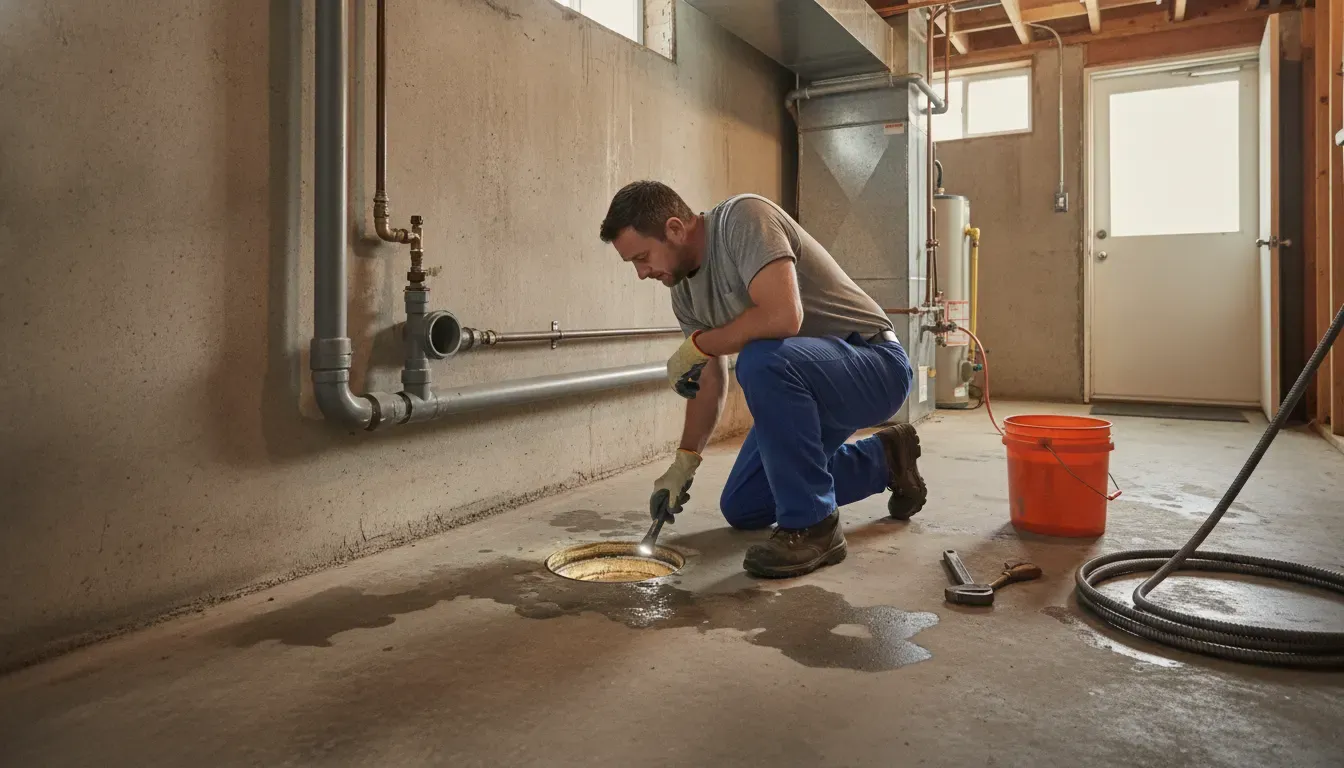
Understanding the causes of sewer backup in a basement can help you respond before contaminated water spreads through the lowest level of your home. A backup may come from a blocked main line, tree roots, a damaged sewer lateral, heavy rain, or a problem with a septic system. The timing, location, odor, and fixtures affected can help point to the source, but a professional inspection is the safest way to confirm it.
Contact Diamond House Plumbing for help diagnosing a sewer backup.
Why does sewage back up into a basement first?
A basement is often the lowest point connected to a home’s drainage system. When wastewater cannot continue toward the municipal sewer or septic system, pressure and gravity can direct it toward the lowest available opening, such as a floor drain, basement toilet, shower, or laundry drain. The basement location does not identify the cause by itself. It shows where the blocked or overloaded system is releasing water.
The U.S. Environmental Protection Agency explains that sewage backups can result from blockages, deteriorating pipes, equipment failures, sewer main breaks, inadequate capacity, severe weather, and poor maintenance. The problem may be on your property, in the sewer lateral between your home and the public main, or in the municipal system.
1. A blockage in the main sewer line
A blockage in the main sewer line is one of the most common explanations when several fixtures begin acting up at the same time. Wastewater from toilets, sinks, showers, and the washing machine may all use the same main path out of the home. If that path is restricted, water from the next fixture can push against the blockage and surface at a lower drain.
Grease, excess paper, wipes, hygiene products, sludge, and other debris can collect inside a line. A partial blockage may cause slow drains and gurgling for days before the line closes enough to create a visible backup. A full blockage can cause wastewater to appear soon after a toilet flush, shower, or laundry cycle.
Look for these clues:
- More than one drain is slow or gurgles.
- The toilet bubbles when another fixture drains.
- Water rises in a tub or floor drain when the washing machine runs.
- The backup occurs regardless of the weather.
Diamond House Plumbing’s guide to main sewer line clog warning signs covers the difference between a fixture clog and a larger main-line problem.
2. Tree roots growing into a sewer lateral
Tree roots can enter a buried sewer lateral through small cracks, separated joints, or deteriorated pipe walls. The moisture inside the line attracts roots, and the growth can catch paper and other debris as it moves through the pipe. Over time, the opening becomes narrower and the backup may recur after a temporary cleaning.
Root intrusion is more likely when a property has mature landscaping or older buried piping. A recurring problem in the same section of the home, especially when there is no clear connection to a single fixture, deserves a sewer camera inspection. Cleaning can remove the immediate obstruction, but it may not correct the damaged pipe that allowed the roots in.
3. A cracked, shifted, or bellied sewer pipe
A sewer pipe does not need to be completely broken to cause a backup. A crack can allow soil into the line, a shifted joint can catch waste, and a low section called a belly can hold water and solids instead of allowing them to flow normally. These defects can produce recurring backups even after the line has been cleared.
Shifting soil, age, poor installation, and nearby excavation can all affect buried piping. In older Inland Empire homes, the condition and material of the sewer lateral are important parts of the diagnosis. A camera inspection can show whether the line is open, damaged, misaligned, or holding standing water. Diamond House Plumbing provides sewer line inspection guidance for Inland Empire properties when a recurring issue needs a closer look.
4. Heavy rain, groundwater, or stormwater entering the system
If the basement drain backs up only during or soon after heavy rain, the cause may be excess water entering a drainage system that cannot move it away quickly enough. Possible contributors include groundwater infiltration through damaged sewer laterals, downspouts or footing drains connected improperly, a failing sump pump, or an overloaded municipal system.
Weather-related backups can look different from a routine clog. The water may be less dark than household sewage, the timing may closely follow a storm, and neighbors may report similar problems. However, water that enters a basement from a floor drain can still be contaminated. Keep people and pets away from the affected area and avoid contact until the source and safety risks are evaluated.
5. A municipal sewer main blockage or overload
Sometimes the restriction is outside the property. A blocked or overloaded public sewer main can cause wastewater to move backward toward connected homes. In that situation, the basement floor drain is often the first place the reverse flow becomes visible because it is lower than most plumbing fixtures.
Clues that a municipal issue may be involved include a backup that begins without recent water use, similar reports from nearby properties, or a problem that coincides with severe weather. A plumber can help determine whether the obstruction is in the home’s line or farther downstream. The property owner may also need to contact the local sewer authority if the public main appears to be involved.
6. A failed or missing backwater valve
A backwater valve is intended to reduce reverse flow from a public sewer toward a property when conditions allow. A valve that is missing, stuck, poorly located, or not maintained may not provide the protection the home needs. A valve is not a substitute for correcting a damaged or blocked sewer line, and installation requirements can vary by jurisdiction and plumbing layout.
Because valve placement affects which fixtures are protected, this is not a component to select based only on an online diagram. A qualified plumber can inspect the existing line, cleanout access, and valve condition, then explain whether repair or replacement is appropriate. Local permits or approvals may also apply.
7. A septic system or drain field problem
Homes that use septic systems can experience basement or lower-level backups when the tank is full, the outlet is restricted, the line to the tank is blocked, or the drain field cannot accept wastewater. A septic-related backup may be accompanied by slow drains throughout the property, wet or unusually green areas near the drain field, odors outside, or a history of overdue pumping.
Not every sewage backup in a septic home starts at the tank. A clog between the house and the tank can create similar symptoms, so the system should be evaluated as a connected whole. Diamond House Plumbing specializes in septic system installation, repair, and related service for properties in Riverside and San Bernardino County.
How can you tell which cause is most likely?
No single symptom proves the source of a sewer backup, but the pattern can help prioritize the inspection. Use this table as a starting point, not as a substitute for a professional diagnosis.
| What you notice | Possible cause | What to check next |
|---|---|---|
| Several fixtures back up after water use | Main sewer line blockage | Stop using water and arrange a line assessment |
| Backup returns after cleaning | Roots, cracked pipe, or pipe belly | Request a camera inspection of the sewer lateral |
| Problem appears during heavy rain | Stormwater, groundwater, or municipal overload | Compare timing with weather and inspect drainage paths |
| Nearby properties have similar symptoms | Municipal main issue | Contact the sewer authority and a plumbing professional |
| Slow drains and outdoor wet areas at a septic property | Tank, outlet, line, or drain field problem | Schedule a septic system evaluation |
What should you do when a basement sewer backup starts?
First, stop adding water to the plumbing system. Do not flush toilets, run the washing machine, or use sinks and showers until the cause is assessed. Keep children and pets away from standing water. If water is near electrical outlets, appliances, or a panel, do not enter the area to operate electrical equipment. Have a qualified professional evaluate the electrical risk.
Sewage can contain microorganisms and other contaminants. Avoid direct contact, do not handle porous materials unnecessarily, and follow guidance from qualified cleanup professionals and your insurer. Diamond House Plumbing’s sewer backup cleanup action plan explains immediate safety priorities without replacing an on-site assessment.
Do not keep adding chemical drain products when the main line may be blocked. They may not reach the restriction, can complicate professional work, and can create additional hazards if wastewater comes back through another fixture. The right next step depends on whether the problem is a fixture clog, main sewer line, lateral, septic system, or municipal main.
How can basement sewer backups be prevented?
Prevention starts with knowing which part of the system has caused trouble before. A plumber may recommend different maintenance based on the findings, but these habits can reduce avoidable strain:
- Keep grease, paper towels, wipes, and other unsuitable materials out of drains.
- Pay attention to recurring gurgling, slow drains, odors, or water movement in a floor drain.
- Have recurring sewer issues investigated instead of repeatedly clearing the symptom.
- Keep roof drainage and surface water directed away from the foundation where practical.
- Maintain septic systems according to the system’s needs and professional guidance.
- Ask whether a backwater valve is suitable for the property’s plumbing layout and local requirements.
- Keep sewer cleanouts accessible so a technician can diagnose the line efficiently.
Older homes and properties with mature trees may benefit from a proactive sewer line evaluation, especially after repeated backups or a change in drainage behavior. In Riverside, San Bernardino, and nearby Inland Empire communities, local soil, landscaping, rainfall events, and septic use can all affect what a technician finds.
Frequently asked questions
Can a full septic tank cause a basement sewer backup?
Yes. A full tank, restricted outlet, blocked house-to-tank line, or failing drain field can slow or stop wastewater movement and cause backups in lower fixtures. The system needs an evaluation to identify which part is restricting flow.
Why does my basement drain back up when it rains?
Heavy rain can overwhelm drainage capacity or expose groundwater infiltration, stormwater connections, sump pump problems, or a municipal sewer overload. The timing is useful evidence, but the water should still be treated cautiously until its source is confirmed.
How do I know whether the backup is in my house or the city sewer?
Reports from neighbors, the timing of the event, and inspection access can help separate a property-side issue from a municipal problem. A plumber can assess the private sewer line, while the local sewer authority may need to investigate the public main.
Can tree roots cause a sewer backup?
Yes. Roots can enter through cracks or separated joints, collect debris, and narrow the passage. If the backup returns after cleaning, a camera inspection can help determine whether root intrusion or pipe damage is present.
Should I use a chemical drain cleaner for a basement backup?
No. A basement backup may involve a main line, sewer lateral, septic system, or public main rather than a single fixture. Stop using water and contact a qualified plumbing professional so the cause can be assessed safely.
Get the cause checked before the next backup
A basement sewer backup is a symptom, not a diagnosis. The durable solution may involve clearing a blockage, repairing a lateral, addressing roots or pipe damage, evaluating a septic system, correcting drainage, or coordinating with the municipality. Identifying the actual cause helps property owners choose the right response and reduce the risk of another contaminated-water event.
Contact Diamond House Plumbing for sewer, septic, and plumbing support across the Inland Empire.
Sources: U.S. Environmental Protection Agency guidance on preventing municipal sewage backups.

Leave a Reply